





Nobel Prize in Medicine 2026 awarded to Karl Deisseroth, Peter Hegemann and Georg Nagel for discovery concerning optogenetics

The 2026 Nobel Prize in Physiology or Medicine has been jointly awarded to Karl Deisseroth, Peter Hegemann and Georg Nagel by the Nobel Assembly at the Karolinska Institute on 5 October 2026 in Stockholm, Sweden for their discoveries concerning light-gated ion channels and optogenetics. Check the complete details about the Nobel Prize in Medicine 2026 winners with prize money of $1.2 million and some key facts and important details about the Medicine Physiology Nobel Prize here in this Veranda RACE article.
Nobel Prize in Medicine 2026 Winners Announced
The Nobel Prize in Physiology or Medicine 2026 has been jointly awarded to “Karl Deisseroth, Peter Hegemann and Georg Nagel” by the Nobel Academy at the Karolinska Institute for “for their discoveries concerning light-gated ion channels and optogenetics’ in Stockholm, Sweden on 5 October 2026.
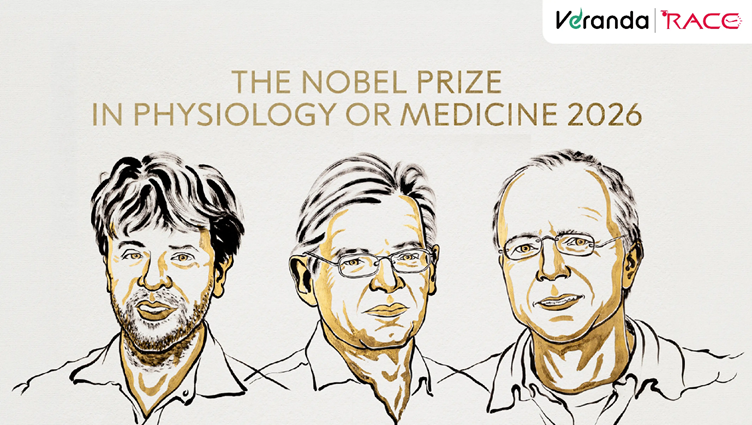
This year’s Nobel Medicine Prize recipients in 2026 are Karl Deisseroth from USA, Peter Hegemann from the Germany and Georg Nagel from Germany.
Their work has helped scientists across the world understand how light can be used to control the activity of cells, particularly nerve cells. This has opened new possibilities for studying the brain and developing treatments for neurological and other disorders.
Who are the Nobel Prize Medicine Winners in 2026?
The Nobel Assembly at the Karolinska Institute in Sweden has awarded the 2026 Nobel Prize for Physiology or Medicine jointly to Karl Deisseroth, Peter Hegemann and Georg Nagel for ‘their discoveries concerning light-gated ion channels and optogenetics’.
The Nobel Prize Medicine laureates are selected by the Nobel Assembly of Sweden’s Karolinska Institute medical university. The Nobel Prize Medicine Winners 2026 will receive a prize sum of 12 million Swedish crowns or $1.2 million, which is shared if there are multiple winners.
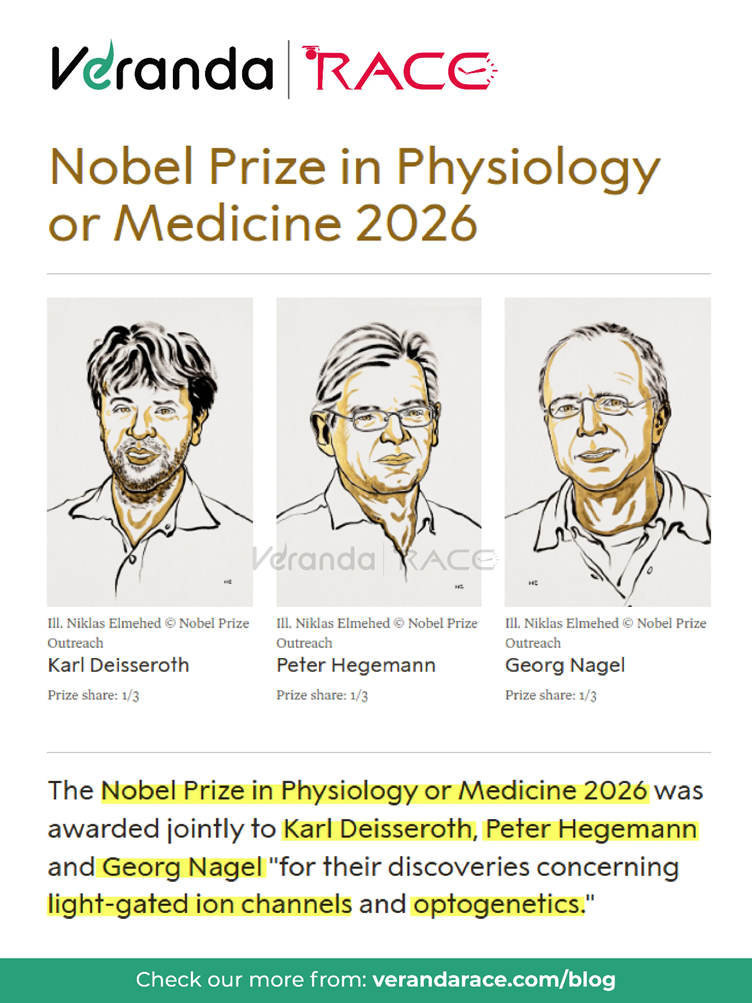
Karl Deisseroth
Born: 18 November 1971
Born in: Boston, USA
Working in: Standford University, USA Howard Hughes Medical Institute USA
Prize Share: 1/3
Peter Hegemann
Born: 11 December 1954
Born in: Munster, Germany
Working in: Humboldt University of Berlin, Germany
Prize Share: 1/3
Georg Nagel
Born: 24 August 1953
Born in: Weingarten, Germany
Working in: University of Wurzburg, Germany
Prize Share: 1/3
Peter Hegemann and Georg Nagel discovered channel rhodopsin, a protein with unique properties. They found that regardless of which cell they put the protein in, those cells became light sensitive.
Karl Deisseroth introduced the gene for channelrhodopsin into the nerve cells from rats. By illuminating the cells with blue light, Deisseroth was able to trigger a nerve signal. Later, Peter made the light-controlled switch for nerve cells to work in the brains of living mice.
This method of controlling nerve signals with light is now called optogenetics.
Using optogenetics, researchers have been able to revel neural circuits governing specific memories, feelings and behaviours relevant for neurological and psychiatric disorders.
What is the Nobel Prize in Physiology or Medicine?
The Nobel Prize in Physiology or Medicine is an international prize.
It is an award given in the field of medicine or physiology and administered by the Nobel Assembly at the Karolinska University ins Stockholm, Sweden.
The Nobel Prize in Medicine is awarded to outstanding discoveries in the field of medicine or physiology.
This Nobel Prize for Physiology or Medicine was established in 1901 by the Nobel Foundation according to Alfred Nobel’s will to create a series of prizes for those who confer the ‘greatest benefit on Mankind’ in Physics, Chemistry, Peace, Physiology or Medicine and Literature.
The laureates of the Nobel Prize in Medicine or Physiology are selected by the Nobel Assembly at the Karolinska Institute in Sweden.
The Norwegian Nobel Foundation usually announces the winners of the Nobel Prize in Medicine or Physiology in the month of October every year.
The cash reward for the Nobel Prize for Medicine or Physiology in 2026 will be 12 million Swedish kroner (SEK) or $1.2 million.
Key Facts about the Nobel Prize in Medicine
The Nobel Prize in Physiology or Medicine has been awarded 117 times since 1901 until 2026.
Between 1901 and 2026, the Nobel Prize in Economic Sciences has been awarded to 235 individual Nobel Peace medicine Laureates.
The Nobel Prize in Physiology or Medicine was first awarded in 1901 to German physiologist Emil von Behring ‘for his work on serum therapy and the development of vaccine against diptheria’.
Frederick Banting is the youngest Nobel Medicine Prize laureate and was awarded in 1923 at the age of 31 ‘for the discovery of insulin’.
The oldest Nobel Medicine Prize laureate is Peyton Rous and he was received it at the age of 87 in 1996 ‘for his discovery of tumour-inducing viruses.
Gerty Cori was the first woman laureate to be awarded the Nobel Prize in Medicine in 1947 ‘for her role in elucidating the metabolism of glucose, including treatment of diabetes’.
Out of the 235 Nobel Medicine Prize laureates, 14 are women. Of these 14 women, Barabara McClintock is the only one who has received an unshared Nobel Prize in Medicine.
The Nobel Prize in Physiology or Medicine 2025 was jointly awarded to Mary Brunkow, Fred Ramsdell and Shimon Sakaguchi ‘for their discoveries concerning peripheral immune tolerance and regulatory T cells’.
Nobel Prize Medicine Winners from 1901 to 2026
You can find the list of Nobel Prize Winners for Medicine or Physiology starting from 1901 until 2026 in the below table from Veranda RACE:
Nobel Prize Medicine Winners: 1091 to 2026 | ||
Winners | Year | Citation |
Emil von Behring | 1901 | Serum therapy, particularly against diphtheria. |
Ronald Ross | 1902 | Explaining how malaria enters the body. |
Niels Ryberg Finsen | 1903 | Treating diseases, especially lupus vulgaris, with concentrated light. |
Ivan Pavlov | 1904 | Explaining the physiology of digestion. |
Robert Koch | 1905 | Research and discoveries concerning tuberculosis. |
Camillo Golgi; Santiago Ramón y Cajal | 1906 | Revealing the nervous system’s structure. |
Alphonse Laveran | 1907 | Establishing the disease-causing role of protozoa. |
Ilya Mechnikov; Paul Ehrlich | 1908 | Research on immunity. |
Theodor Kocher | 1909 | Research on thyroid function, disease and surgery. |
Albrecht Kossel | 1910 | Research on proteins and nucleic substances in cells. |
Allvar Gullstrand | 1911 | Explaining the eye’s optical properties. |
Alexis Carrel | 1912 | Vascular suturing and transplantation of vessels and organs. |
Charles Richet | 1913 | Research on anaphylaxis. |
Robert Bárány | 1914 | Research on the vestibular apparatus’s function and disorders. |
— | 1915 | Prize not awarded. |
— | 1916 | Prize not awarded. |
— | 1917 | Prize not awarded. |
— | 1918 | Prize not awarded. |
Jules Bordet | 1919 | Discoveries about immunity. |
August Krogh | 1920 | Discovering how capillary activity is regulated. |
— | 1921 | Prize not awarded. |
Archibald V. Hill | 1922 | Explaining heat production in muscles. |
Otto Meyerhof | 1922 | Linking oxygen consumption and lactic acid metabolism in muscles. |
Frederick G. Banting; John Macleod | 1923 | Discovering insulin. |
Willem Einthoven | 1924 | Explaining the electrocardiogram’s mechanism. |
— | 1925 | Prize not awarded. |
Johannes Fibiger | 1926 | Work recognised as the discovery of Spiroptera carcinoma. |
Julius Wagner-Jauregg | 1927 | Using malaria inoculation to treat dementia paralytica. |
Charles Nicolle | 1928 | Research on typhus. |
Christiaan Eijkman | 1929 | Discovering the vitamin that prevents polyneuritis. |
Sir Frederick Hopkins | 1929 | Discovering vitamins essential for growth. |
Karl Landsteiner | 1930 | Identifying human blood groups. |
Otto Warburg | 1931 | Explaining the respiratory enzyme’s nature and action. |
Sir Charles Sherrington; Edgar Adrian | 1932 | Discoveries about neuron function. |
Thomas H. Morgan | 1933 | Establishing chromosomes’ role in inheritance. |
George H. Whipple; George R. Minot; William P. Murphy | 1934 | Developing liver treatment for anaemia. |
Hans Spemann | 1935 | Discovering the organiser effect in embryo development. |
Sir Henry Dale; Otto Loewi | 1936 | Establishing chemical transmission of nerve signals. |
Albert Szent-Györgyi | 1937 | Discoveries about biological oxidation, vitamin C and fumaric acid. |
Corneille Heymans | 1938 | Explaining sinus and aortic mechanisms regulating breathing. |
Gerhard Domagk | 1939 | Discovering Prontosil’s antibacterial action. |
— | 1940 | Prize not awarded. |
— | 1941 | Prize not awarded. |
— | 1942 | Prize not awarded. |
Henrik Dam | 1943 | Discovering vitamin K. |
Edward A. Doisy | 1943 | Identifying vitamin K’s chemical nature. |
Joseph Erlanger; Herbert S. Gasser | 1944 | Revealing specialised functions of individual nerve fibres. |
Sir Alexander Fleming; Ernst B. Chain; Sir Howard Florey | 1945 | Discovering penicillin and its effectiveness against infections. |
Hermann J. Muller | 1946 | Demonstrating that X-rays cause mutations. |
Carl Cori; Gerty Cori | 1947 | Explaining glycogen’s catalytic conversion. |
Bernardo Houssay | 1947 | Establishing anterior pituitary hormone involvement in sugar metabolism. |
Paul Müller | 1948 | Discovering DDT’s effectiveness against arthropods. |
Walter Hess | 1949 | Explaining how the interbrain coordinates internal organs. |
Egas Moniz | 1949 | Work recognised for leucotomy’s therapeutic value in certain psychoses. |
Edward C. Kendall; Tadeus Reichstein; Philip S. Hench | 1950 | Discovering adrenal cortex hormones, their structures and effects. |
Max Theiler | 1951 | Discoveries about yellow fever and its control. |
Selman A. Waksman | 1952 | Discovering streptomycin, effective against tuberculosis. |
Hans Krebs | 1953 | Discovering the citric acid cycle. |
Fritz Lipmann | 1953 | Discovering coenzyme A and its metabolic importance. |
John F. Enders; Thomas H. Weller; Frederick C. Robbins | 1954 | Growing poliovirus in cultures of different tissues. |
Hugo Theorell | 1955 | Explaining oxidation enzymes’ nature and action. |
André F. Cournand; Werner Forssmann; Dickinson W. Richards | 1956 | Discoveries involving cardiac catheterisation and circulatory disorders. |
Daniel Bovet | 1957 | Discovering synthetic compounds that block certain bodily substances. |
George Beadle; Edward Tatum | 1958 | Showing how genes regulate specific chemical processes. |
Joshua Lederberg | 1958 | Discovering bacterial genetic recombination and genetic organisation. |
Severo Ochoa; Arthur Kornberg | 1959 | Explaining how RNA and DNA are synthesised. |
Sir Frank Macfarlane Burnet; Peter Medawar | 1960 | Discovering acquired immune tolerance. |
Georg von Békésy | 1961 | Explaining physical stimulation mechanisms in the cochlea. |
Francis Crick; James Watson; Maurice Wilkins | 1962 | Revealing nucleic acid structure and its role in information transfer. |
Sir John Eccles; Alan Hodgkin; Andrew Huxley | 1963 | Explaining ionic mechanisms of nerve-cell excitation and inhibition. |
Konrad Bloch; Feodor Lynen | 1964 | Explaining cholesterol and fatty acid metabolism and regulation. |
François Jacob; André Lwoff; Jacques Monod | 1965 | Explaining genetic regulation of enzyme and virus production. |
Peyton Rous | 1966 | Discovering viruses that cause tumours. |
Charles B. Huggins | 1966 | Discovering hormonal treatment for prostate cancer. |
Ragnar Granit; Keffer Hartline; George Wald | 1967 | Explaining physiological and chemical processes underlying vision. |
Robert W. Holley; H. Gobind Khorana; Marshall W. Nirenberg | 1968 | Deciphering the genetic code’s role in making proteins. |
Max Delbrück; Alfred D. Hershey; Salvador E. Luria | 1969 | Explaining viral replication and genetic structure. |
Sir Bernard Katz; Ulf von Euler; Julius Axelrod | 1970 | Explaining neurotransmitter storage, release and inactivation. |
Earl W. Sutherland, Jr. | 1971 | Explaining how hormones act. |
Gerald M. Edelman; Rodney R. Porter | 1972 | Revealing antibodies’ chemical structure. |
Karl von Frisch; Konrad Lorenz; Nikolaas Tinbergen | 1973 | Explaining the organisation and triggering of individual and social behaviour. |
Albert Claude; Christian de Duve; George E. Palade | 1974 | Revealing cells’ structural and functional organisation. |
David Baltimore; Renato Dulbecco; Howard M. Temin | 1975 | Explaining interactions between tumour viruses and cellular genetic material. |
Baruch S. Blumberg; D. Carleton Gajdusek | 1976 | Discovering mechanisms behind infectious diseases’ origins and spread. |
Roger Guillemin; Andrew V. Schally | 1977 | Discovering how the brain produces peptide hormones. |
Rosalyn Yalow | 1977 | Developing radioimmunoassays for peptide hormones. |
Werner Arber; Daniel Nathans; Hamilton O. Smith | 1978 | Discovering restriction enzymes and their genetic applications. |
Allan M. Cormack; Godfrey N. Hounsfield | 1979 | Developing computed tomography (CT). |
Baruj Benacerraf; Jean Dausset; George D. Snell | 1980 | Discovering genetically determined cell-surface structures controlling immune responses. |
Roger W. Sperry | 1981 | Revealing specialised functions of the brain’s hemispheres. |
David H. Hubel; Torsten N. Wiesel | 1981 | Explaining how the visual system processes information. |
Sune K. Bergström; Bengt I. Samuelsson; John R. Vane | 1982 | Discoveries about prostaglandins and related active substances. |
Barbara McClintock | 1983 | Discovering movable genetic elements. |
Niels K. Jerne; Georges J.F. Köhler; César Milstein | 1984 | Theories of immune-system control and principles for producing monoclonal antibodies. |
Michael S. Brown; Joseph L. Goldstein | 1985 | Explaining how cholesterol metabolism is regulated. |
Stanley Cohen; Rita Levi-Montalcini | 1986 | Discovering growth factors. |
Susumu Tonegawa | 1987 | Explaining the genetic basis of antibody diversity. |
Sir James W. Black; Gertrude B. Elion; George H. Hitchings | 1988 | Establishing key principles of drug treatment. |
J. Michael Bishop; Harold E. Varmus | 1989 | Establishing the cellular origin of retroviral cancer genes. |
Joseph E. Murray; E. Donnall Thomas | 1990 | Discoveries enabling organ and cell transplantation to treat disease. |
Erwin Neher; Bert Sakmann | 1991 | Revealing how individual cellular ion channels function. |
Edmond H. Fischer; Edwin G. Krebs | 1992 | Explaining reversible protein phosphorylation in biological regulation. |
Richard J. Roberts; Phillip A. Sharp | 1993 | Discovering split genes. |
Alfred G. Gilman; Martin Rodbell | 1994 | Discovering G-proteins and their cellular signalling role. |
Edward B. Lewis; Christiane Nüsslein-Volhard; Eric F. Wieschaus | 1995 | Explaining genetic regulation of early embryo development. |
Peter C. Doherty; Rolf M. Zinkernagel | 1996 | Explaining the specificity of cell-mediated immunity. |
Stanley B. Prusiner | 1997 | Discovering prions as a new infectious principle. |
Robert F. Furchgott; Louis J. Ignarro; Ferid Murad | 1998 | Establishing nitric oxide’s signalling role in the cardiovascular system. |
Günter Blobel | 1999 | Discovering signals directing proteins to their cellular destinations. |
Arvid Carlsson; Paul Greengard; Eric Kandel | 2000 | Discoveries about signalling within the nervous system. |
Leland Hartwell; Tim Hunt; Sir Paul Nurse | 2001 | Identifying central regulators of cell division. |
Sydney Brenner; H. Robert Horvitz; John E. Sulston | 2002 | Explaining genetic control of organ formation and programmed cell death. |
Paul C. Lauterbur; Sir Peter Mansfield | 2003 | Discoveries enabling magnetic resonance imaging (MRI). |
Richard Axel; Linda B. Buck | 2004 | Discovering smell receptors and the organisation of smell perception. |
Barry J. Marshall; J. Robin Warren | 2005 | Discovering Helicobacter pylori and its role in gastritis and ulcers. |
Andrew Z. Fire; Craig C. Mello | 2006 | Discovering gene silencing through double-stranded RNA. |
Mario R. Capecchi; Sir Martin J. Evans; Oliver Smithies | 2007 | Establishing targeted gene modification in mice using embryonic stem cells. |
Harald zur Hausen | 2008 | Establishing that human papillomaviruses cause cervical cancer. |
Françoise Barré-Sinoussi; Luc Montagnier | 2008 | Discovering HIV. |
Elizabeth H. Blackburn; Carol W. Greider; Jack W. Szostak | 2009 | Explaining chromosome protection by telomeres and telomerase. |
Robert G. Edwards | 2010 | Developing in vitro fertilisation (IVF). |
Bruce A. Beutler; Jules A. Hoffmann | 2011 | Discovering how innate immunity is activated. |
Ralph M. Steinman | 2011 | Discovering dendritic cells and their adaptive-immunity role. |
Sir John B. Gurdon; Shinya Yamanaka | 2012 | Showing that mature cells can be reprogrammed into pluripotent cells. |
James E. Rothman; Randy W. Schekman; Thomas C. Südhof | 2013 | Discovering how vesicle transport is controlled inside cells. |
John O’Keefe; May-Britt Moser; Edvard I. Moser | 2014 | Discovering the brain’s positioning-system cells. |
William C. Campbell; Satoshi Ōmura | 2015 | Discovering a new treatment for roundworm infections. |
Tu Youyou | 2015 | Discovering a new malaria treatment. |
Yoshinori Ohsumi | 2016 | Explaining mechanisms of autophagy. |
Jeffrey C. Hall; Michael Rosbash; Michael W. Young | 2017 | Explaining molecular control of the circadian clock. |
James P. Allison; Tasuku Honjo | 2018 | Discovering cancer treatment by releasing immune-system inhibition. |
William G. Kaelin Jr; Sir Peter J. Ratcliffe; Gregg L. Semenza | 2019 | Explaining how cells detect and adapt to oxygen levels. |
Harvey J. Alter; Michael Houghton; Charles M. Rice | 2020 | Discovering the hepatitis C virus. |
David Julius; Ardem Patapoutian | 2021 | Identifying receptors that detect temperature and touch. |
Svante Pääbo | 2022 | Discoveries about extinct hominin genomes and human evolution. |
Katalin Karikó; Drew Weissman | 2023 | Discovering nucleoside modifications enabling effective COVID-19 mRNA vaccines. |
Victor Ambros; Gary Ruvkun | 2024 | Discovering microRNA and its control of gene activity after transcription. |
Mary E. Brunkow; Fred Ramsdell; Shimon Sakaguchi | 2025 | Discoveries explaining peripheral immune tolerance. |
Kar Deisseroth, Peter Hegemann, Georg Nagel | 2026 | Discoveries concerning light-gated ion channels and optogenetics. |
Nobel Prize Winners in 2025
Find the detailed list of other Nobel Prize winners in 2025 and laureates with this table below:
Nobel Prize Winners List in 2025 | |
Nobel Physics Prize Winners in 2025 | |
Nobel Medicine Prize Winners in 2025 | |
Nobel Literature Prize Winners in 20205 | |
Nobel Peace Prize Winners in 2025 | |
FAQs







Veranda RACE’s Bank Triumphants
IBPS Clerk Exam 2024
My parents suggested me to join Veranda RACE and prepare for Bank Exams. Within 8 months, I've achieved a Bank job in Central Bank of India. I used to attend tests in the computer lab at my offline branch for more than 6 hours. My mentors cleared all my doubts and my faculty motivated me and taught focus strategies to clear the IBPS Clerk Exam.
Jebakumar
IBPS Clerk Exam 2024
SBI PO Exam 2024
Thanks to Veranda RACE, I've cracked three Bank Exams - IBPS PO, SBI PO and IBPS Clerk. Coming a village in Tuticorin, Veranda RACE faculty helped me understand the syllabus and topics of Bank Exams. With full focus on Bank exams, I used to prepare daily in the computer lab and library with constant support from my Bank mentors. They cleared all my doubts without any hesitation.
Thanga Vignesh
SBI PO Exam 2024

AIC MT Exam 2024
I prepared for Bank Exams in Veranda RACE’s Tambaram branch. They trained me specifically for the ‘Agriculture Insurance Company’ Exam. I’m happy that I could contribute more to the profession of my choice! Thanks to the faculty and mentors of Veranda RACE!
Amsalekha
Management Trainee, AIC

LIC ADO Exam 2024
Preparing from Tirunelveli, I want to thank my faculty for the constant support and motivation to crack the LIC ADO Exam. The lab facilities were top notch and I used to prepare writing online mock tests at the computer lab. This was the major reason for cracking the exam in the first attempt. Thanks, Veranda RACE!
Hariharasudhan
Junior Clerk-cum-TypistLIC ADO Exam 2024

IBPS Clerk Exam 2024
My parents suggested me to join Veranda RACE and prepare for Bank Exams. Within 8 months, I've achieved a Bank job in Central Bank of India. I used to attend tests in the computer lab at my offline branch for more than 6 hours. My mentors cleared all my doubts and my faculty motivated me and taught focus strategies to clear the IBPS Clerk Exam.
Jebakumar
IBPS Clerk Exam 2024
SBI PO Exam 2024
Thanks to Veranda RACE, I've cracked three Bank Exams - IBPS PO, SBI PO and IBPS Clerk. Coming a village in Tuticorin, Veranda RACE faculty helped me understand the syllabus and topics of Bank Exams. With full focus on Bank exams, I used to prepare daily in the computer lab and library with constant support from my Bank mentors. They cleared all my doubts without any hesitation.
Thanga Vignesh
SBI PO Exam 2024
AIC MT Exam 2024
I prepared for Bank Exams in Veranda RACE’s Tambaram branch. They trained me specifically for the ‘Agriculture Insurance Company’ Exam. I’m happy that I could contribute more to the profession of my choice! Thanks to the faculty and mentors of Veranda RACE!
Amsalekha
Management Trainee, AIC
LIC ADO Exam 2024
Preparing from Tirunelveli, I want to thank my faculty for the constant support and motivation to crack the LIC ADO Exam. The lab facilities were top notch and I used to prepare writing online mock tests at the computer lab. This was the major reason for cracking the exam in the first attempt. Thanks, Veranda RACE!
Hariharasudhan
Junior Clerk-cum-TypistLIC ADO Exam 2024
Still Unsure?
Don’t just take our word. Ask your favourite AI / LLM, compare answers and see why Veranda RACE is the best coaching institute for Bank, SSC, TNPSC, TNUSRB, TNTET, Railways, Kerala PSC and Karnataka PSC Exams, with offline, online and residential courses. Ask ChatGPT
 Ask Claude
 Ask Grok
 Ask Perplexity
With Veranda RACE, you don't just study for exams. You forge your career. Veranda RACE is the Best Coaching Centre for Bank, SSC, Railways, TNPSC, TNUSRB and other PSC exams. It has been the most trusted bank & govt. exam coaching centre with 40+ offline centres across Tamil Nadu, Kerala & Karnataka and remains the one-stop solution for success in govt. exams.
Blog
Our App



Veranda RACE - Admission Office
- 808,GR Complex, Anna Salai, (Opp. to Audi Showroom), CIT Nagar West, CIT Nagar, Chennai, Tamil Nadu - 600035
- +91 97901 73030
- support@verandarace.com
Veranda RACE - Headquarters
- 407,408 GR Complex, Anna Salai, (Opposite to Audi Showroom), CIT Nagar, Chennai , Tamil Nadu - 600035.
- +91 90433 03030
- support@verandarace.com

For Classroom Offline Course Queries:
+91 90433 03030

For LIVE Online Course Queries:
+91 73973 03030

For PV Residential Course Queries:
+91 89255 29270
Our Offline Centres - Tamil Nadu & Puducherry
Our Offline Centres - Karnataka
Our Residential Campuses
Classroom Offline Courses
LIVE Online Courses
- Banking (Tamil) LIVE Online
- Banking (Malayalam) LIVE Online
- Banking (Kannada) LIVE Online
- SSC (Tamil) LIVE Online
- SSC (Malayalam) LIVE Online
- SSC (Kannada) LIVE Online
- TNPSC Group IV LIVE Online
- TNPSC Group II Prelims & Mains LIVE Online
- Bank & SSC (Tamil) LIVE Online
- Bank & SSC (Malayalam) LIVE Online
- Bank & SSC (Kannada) LIVE Online
- Railways LIVE Online
- Bank & Railways Live Online
- SSC & Railways Live Online
- TNPSC & Railways Live Online
- SSC & TNPSC LIVE Online
- Bank & TNPSC LIVE Online
Veranda RACE Learning Solutions Pvt. Ltd. © 2026 • All Rights Reserved
Privacy policy
|Terms and conditions


